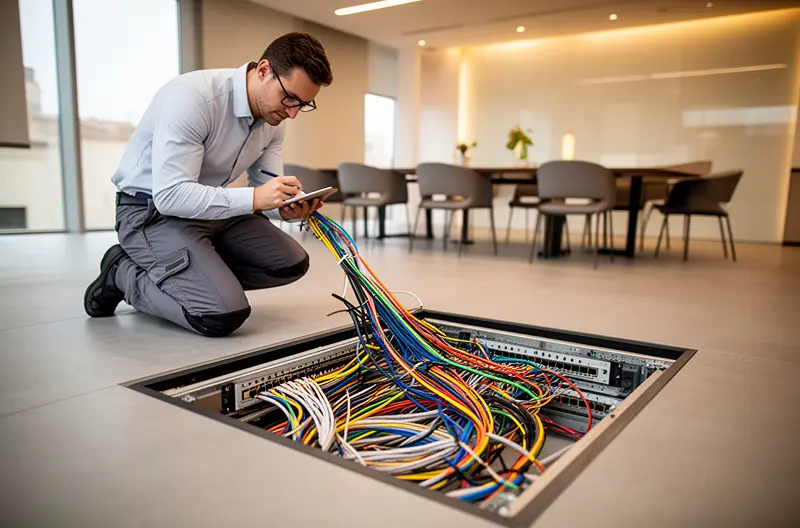

El cableado estructurado en Madrid es el servicio de diseño e instalación de una red física de datos, voz y fibra óptica organizada por zonas y componentes estandarizados, que permite a cualquier empresa operar con conectividad fiable, escalar sin rehacer la instalación y cumplir normativa técnica verificable.
Cuando una empresa crece o se traslada, la red de datos suele ser el primer cuello de botella: cables sin etiquetar, puntos de red insuficientes, racks sin orden y conexiones que nadie sabe a dónde van. El resultado son cortes de conectividad, tiempos de resolución largos y costes de intervención recurrentes que se acumulan. Un proyecto de cableado estructurado resuelve exactamente ese problema: establece una arquitectura física planificada, con rutas definidas, componentes certificados y documentación que permite a cualquier técnico intervenir con rapidez. En Impulso Tecnológico llevamos más de 15 años ejecutando este tipo de proyectos en Madrid, desde la adecuación de un único puesto de trabajo hasta instalaciones para edificios completos y centros de datos, siempre con certificación del cableado como entregable final.
Qué es el cableado estructurado y por qué importa en Madrid
El cableado estructurado no es simplemente "pasar cables": es una arquitectura de red física diseñada según estándares internacionales que organiza todos los medios de transmisión —datos, voz y video— en subsistemas diferenciados y documentados. Su importancia en entornos empresariales madrileños radica en que elimina la improvisación: cada punto de red, cada latiguillo y cada panel de parcheo tiene una función y una ruta definida, lo que reduce drásticamente el tiempo de diagnóstico ante cualquier incidencia.
En Impulso Tecnológico, antes de proponer ningún material ni categoría de cable, analizamos el negocio y sus requisitos actuales y futuros. Una empresa de logística con 40 puestos hoy puede necesitar 80 en dos años; una oficina que solo usa datos hoy puede integrar telefonía IP mañana. Ese análisis previo determina la arquitectura, el tipo de cableado y la electrónica de red adecuados para que la inversión sea duradera.
| Criterio | Red sin estructurar | Cableado estructurado certificado |
|---|---|---|
| Tiempo de diagnóstico ante fallo | Alto (sin documentación ni etiquetado) | Bajo (trazabilidad completa por punto) |
| Escalabilidad | Requiere rehacer tramos o añadir cables sueltos | Ampliación desde el panel de parcheo sin obra mayor |
| Soporte de servicios (voz/datos/WiFi) | Soluciones parcheadas por servicio | Infraestructura unificada y convergente |
| Garantía de rendimiento | Sin verificación objetiva | Certificación con equipos Fluke y normativa ISO/ANSI/EIA/TIA |
| Coste de mantenimiento a largo plazo | Intervenciones reactivas frecuentes | Mantenimiento planificado y predecible |
Definición práctica: arquitectura de red para voz y datos
Una instalación de cableado estructurado divide la red física en subsistemas independientes pero interconectados: el cuarto de equipos o CPD, el cableado backbone o vertical, el cableado horizontal y los puestos de trabajo. Cada subsistema tiene sus propios estándares de distancia, rendimiento y conectorización. Esta separación permite que un cambio en un punto de trabajo no afecte al backbone, o que una ampliación de planta no exija rehacer el CPD. La infraestructura queda preparada para operar hoy con los requisitos actuales y para incorporar nuevos servicios —telefonía IP, videovigilancia, WiFi corporativo— sin rehacer la instalación base. En proyectos para empresas de redes de datos y voz en Madrid, esta arquitectura es el punto de partida que Impulso Tecnológico diseña a medida antes de seleccionar ningún componente.
Beneficios operativos: continuidad, orden y facilidad de ampliación
Una red estructurada correctamente instalada soporta simultáneamente tráfico de datos, voz sobre IP y señal de video sin degradación, porque cada medio está dimensionado para la carga real del entorno. Cuando surge una incidencia, el etiquetado y la documentación permiten localizar el punto afectado en minutos, no en horas. La ampliación de nuevos puestos se gestiona desde el panel de parcheo del rack, sin necesidad de tirar nuevos cables en la mayoría de los casos. Esto reduce la dependencia de intervenciones urgentes y los costes asociados. Desde el punto de vista operativo, una empresa con cableado estructurado certificado tiene menos cortes, resoluciones más rápidas y una infraestructura que puede auditar en cualquier momento. Esos son los beneficios concretos que Impulso Tecnológico garantiza al entregar cada proyecto con certificación verificable.
Cuándo conviene: oficinas, naves, comunidades y entornos con crecimiento
El cableado estructurado es la opción correcta en cualquier entorno donde la conectividad sea crítica para la operación: oficinas con más de 10 puestos, naves industriales con maquinaria conectada, centros educativos, clínicas, edificios de uso mixto o instalaciones que prevén crecer en los próximos dos o tres años. También aplica cuando una empresa hereda una red caótica —cables sin etiquetar, racks sin orden, puntos de red sin documentar— y necesita sanearlo antes de que el siguiente fallo cause una parada de producción. En Madrid, Impulso Tecnológico ha ejecutado proyectos tanto en oficinas de tamaño medio como en instalaciones industriales y CPDs, adaptando el alcance del proyecto a las necesidades reales del cliente y a su previsión de crecimiento, sin sobredimensionar ni quedarse corto.

Arquitectura del sistema: CPD, racks y cableado horizontal/vertical
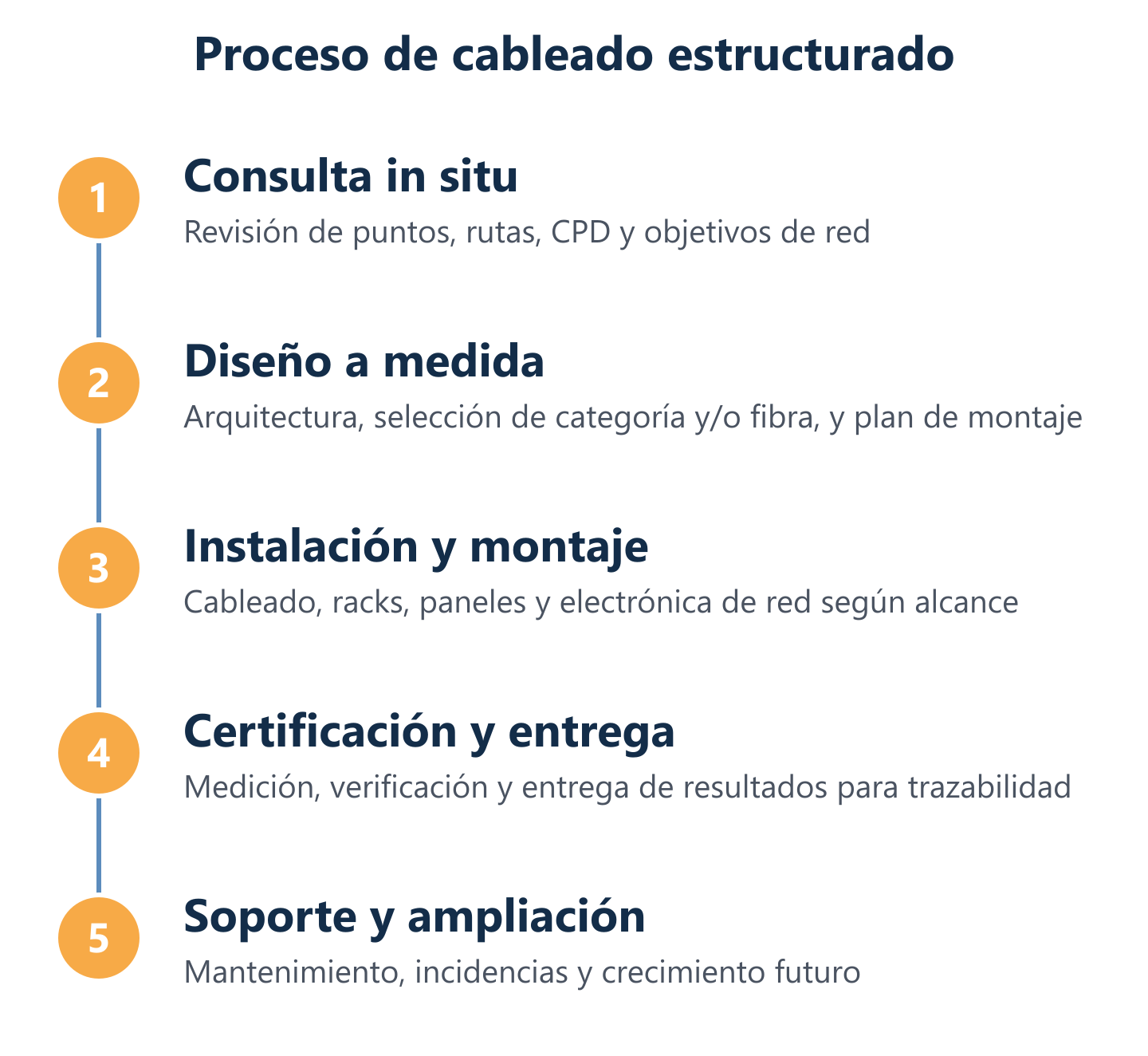
Planificar la arquitectura antes de instalar un solo metro de cable es lo que diferencia una instalación profesional de una acumulación de soluciones parciales. En Impulso Tecnológico seguimos un método estructurado que parte del diseño y termina con la certificación, garantizando que cada componente tiene su lugar y su función documentada.
- Análisis y consulta in situ: visita técnica gratuita para evaluar el espacio, los requisitos de conectividad, el número de puestos y la ubicación óptima del CPD o cuarto de comunicaciones.
- Diseño de la arquitectura: definición de rutas de cableado, ubicación de racks, distribución de bandejas y previsión de puntos de red por zona, incluyendo voz, datos y WiFi.
- Selección de materiales y electrónica de red: elección de categoría de cable, paneles de parcheo, switches y accesorios según los requisitos de ancho de banda y escalabilidad.
- Instalación: tendido de cable, conectorización, etiquetado y montaje de racks, con mínima afectación a la actividad del cliente y adaptación de horarios cuando es necesario.
- Saneado y organización: eliminación de cables abandonados, organización del cableado existente y limpieza del CPD para dejar la infraestructura mantenible.
- Certificación y entrega: verificación de cada enlace con equipos de medición, documentación de resultados y entrega del proyecto con presupuesto cerrado y sin desviaciones.
Componentes clave: CPD, armarios rack, paneles y puestos de trabajo
El CPD o cuarto de comunicaciones es el núcleo físico de la red: alberga los armarios rack donde se concentran los paneles de parcheo, los switches, los routers y los sistemas de alimentación ininterrumpida (SAI). Su ubicación debe garantizar acceso controlado, temperatura adecuada y espacio suficiente para crecer. Los armarios rack organizan verticalmente todos los equipos activos y pasivos, con bandejas y gestores de cable que evitan el caos de latiguillos cruzados. Los paneles de parcheo son el punto de conexión entre el cableado horizontal y la electrónica de red, y permiten reconfigurar puestos sin tocar el cableado permanente. En los puestos de trabajo, las rosetas y los conectores RJ45 o de fibra son el último eslabón de la cadena. Impulso Tecnológico diseña y monta cada uno de estos componentes con criterios de orden, accesibilidad y mantenibilidad, utilizando materiales de fabricantes contrastados.
Tipos de cableado: horizontal, vertical y backbone explicado
El cableado horizontal conecta cada puesto de trabajo con el armario rack de planta o cuarto de comunicaciones más cercano. Es el subsistema más numeroso en cualquier instalación y su longitud máxima estándar es de 90 metros de cable permanente. El cableado vertical o backbone interconecta los distintos cuartos de comunicaciones entre sí y con el CPD principal, normalmente mediante fibra óptica para cubrir distancias mayores y garantizar el ancho de banda entre plantas o edificios. La distinción entre ambos tipos no es solo técnica: determina qué categoría de cable usar, qué tipo de conector y qué pruebas de certificación aplicar. En instalaciones para empresas con varias plantas o naves separadas, el backbone de fibra óptica es el elemento que garantiza que la red funcione como un sistema unificado y no como islas de conectividad independientes.
Criterios de diseño: ubicación de racks, rutas y escalabilidad
Ubicar mal un rack o trazar una ruta de cableado sin prever el crecimiento son los errores más frecuentes en instalaciones que luego requieren rehacerse parcialmente. Los criterios que Impulso Tecnológico aplica en cada proyecto incluyen: distancia máxima al puesto de trabajo más alejado, accesibilidad para mantenimiento futuro, capacidad de las bandejas para absorber nuevos cables sin saturarse y separación entre cableado de datos y cableado eléctrico para evitar interferencias. El saneado de instalaciones existentes —eliminación de cables abandonados, reorganización de latiguillos, etiquetado coherente— es parte del proceso cuando el cliente ya dispone de una red que necesita ordenarse antes de ampliarse. Una infraestructura bien diseñada desde el inicio reduce significativamente el coste de las intervenciones futuras y facilita que cualquier técnico pueda trabajar en ella sin depender de quien la instaló.
Elección de cable y certificación: cobre, fibra y normativa
Elegir la categoría de cable correcta no es una decisión estética: determina el ancho de banda disponible, la distancia máxima sin repetidores y la vida útil de la instalación. Impulso Tecnológico trabaja con Cat 5e, Cat 6 y Cat 7, así como con fibra óptica multimodo y monomodo, seleccionando el medio adecuado para cada tramo según los requisitos del proyecto. Todos los materiales que utilizamos deben poder certificarse, lo que implica que el rendimiento de cada enlace se verifica objetivamente antes de dar el proyecto por entregado.
Los criterios que guían la selección son:
- Ancho de banda requerido: Cat 6 soporta 1 Gbps hasta 55 m en entornos con interferencias; Cat 6A llega a 10 Gbps hasta 100 m; Cat 7 añade apantallamiento total para entornos con alta densidad electromagnética.
- Distancia del enlace: para tramos superiores a 100 m o conexiones entre edificios, la fibra óptica es la única opción técnicamente viable.
- Tipo de entorno: naves industriales con maquinaria pesada requieren cable apantallado (STP/FTP); oficinas estándar funcionan correctamente con UTP de Cat 6 o 6A.
- Escalabilidad futura: instalar Cat 6A cuando el presupuesto lo permite evita reemplazar el cableado horizontal en tres o cuatro años si el cliente migra a 10 Gbps.
- Normativa aplicable: los proyectos se ejecutan bajo los marcos ISO/IEC 11801, ANSI/TIA-568 y EIA/TIA, que definen los parámetros de rendimiento exigibles y los procedimientos de certificación.
Cat 6, 6ª y 7 vs UTP 6A/7/8: cómo decidir sin equivocarte
La decisión entre categorías de cable depende de tres variables: el ancho de banda que necesitas hoy, el que preves necesitar en los próximos cinco años y el tipo de entorno donde se instala. Cat 6 UTP es suficiente para la mayoría de oficinas con tráfico de datos estándar a 1 Gbps. Cat 6A —la variante que alcanza 10 Gbps hasta 100 metros— es la opción recomendada para instalaciones nuevas donde se prevé crecimiento o donde ya hay switches de 10 Gbps en el rack. Cat 7, con apantallamiento individual por par y global (S/FTP), aporta mayor inmunidad a interferencias y es adecuado para entornos industriales o CPDs con alta densidad de equipos. Cat 8 queda reservado para enlaces de muy corta distancia dentro del CPD (hasta 30 metros a 40 Gbps). Impulso Tecnológico asesora sobre la categoría óptima en la visita técnica previa, evitando tanto el sobredimensionamiento innecesario como quedarse corto para los requisitos reales.
Fibra óptica multimodo y monomodo: cuándo aporta valor
La fibra óptica entra en juego cuando las distancias superan los 100 metros del cableado de cobre, cuando se necesitan enlaces de alta capacidad entre edificios o plantas, o cuando el entorno tiene interferencias electromagnéticas que hacen inviable el cobre. La fibra multimodo (OM3, OM4 u OM5) es la opción habitual para enlaces dentro de un mismo edificio o campus, con distancias de hasta 300-550 metros a 10 Gbps según la categoría. La fibra monomodo se utiliza para distancias mayores —kilómetros— y es la solución estándar para enlaces entre sedes o conexiones a operador. En proyectos de instalación de puntos de red en Madrid donde hay varias naves o plantas separadas, el backbone de fibra multimodo entre cuartos de comunicaciones es la arquitectura más habitual. Impulso Tecnológico diseña, instala y certifica ambos tipos de fibra, integrándolos con la electrónica de red adecuada.
Certificación y calidad: qué se mide y cómo se entrega el resultado
La certificación del cableado estructurado es la prueba objetiva de que cada enlace instalado cumple los parámetros de rendimiento exigidos por la normativa. Con equipos de medición profesionales se verifican parámetros como la atenuación, el NEXT (diafonía en extremo cercano), el retardo de propagación y la pérdida de retorno, entre otros. Cada enlace recibe un resultado de PASS o FAIL, y el informe de certificación recoge los valores medidos para cada punto de red. Este documento es el entregable técnico que el cliente debe exigir al finalizar cualquier proyecto de cableado estructurado para empresas, porque garantiza que la instalación cumple la normativa ISO/IEC 11801 o ANSI/TIA-568 aplicable y que el rendimiento es verificable. En Impulso Tecnológico, la certificación forma parte del proceso estándar de entrega: no consideramos un proyecto terminado hasta que cada enlace ha pasado las pruebas correspondientes.
Un proyecto de cableado estructurado bien ejecutado no es un gasto puntual: es la base sobre la que se construye toda la infraestructura IT de una empresa durante años. Con un diseño correcto, materiales certificables y una instalación documentada, la red queda preparada para crecer con menos incidencias y más continuidad operativa. Si necesitas ampliar puntos de red, integrar telefonía IP, añadir cobertura WiFi o mejorar el orden de tu CPD en Madrid, el punto de partida es una visita técnica sin coste donde analizamos tu situación real y te presentamos un presupuesto cerrado. Puedes ampliar información sobre el servicio completo en nuestra página de cableado estructurado: diseño, instalación y beneficios, o explorar cómo gestionamos la gestión de redes IT para empresas de forma integral. Si tu proyecto incluye la adecuación de un CPD, consulta también nuestra guía sobre montaje de CPDs y racks de comunicaciones.