
Choosing a cybersecurity company in Barcelona is not about stacking more licences. The real goal is to reduce operational risk: protect identities, email, laptops, Microsoft 365, servers, the network and your backups; spot the signals that matter; and know exactly who acts when an alert fires. Impulso Tecnologico turns that scope into a prioritised plan with named owners, evidence and regular follow-up.
Many of the organisations we support in Barcelona are subsidiaries, regional offices or fast-growing teams that work in English, report to a group IT or security function abroad and still need someone who understands the local context. We work as your external security team or as reinforcement for your IT lead. For any on-site work in Barcelona we confirm the nearest available local technician or partner, the location, timing, scope and access, while monitoring, support and governance stay integrated in one service. Security also fits with the rest of our IT services for businesses in Barcelona: maintenance, helpdesk and cloud under the same follow-up.
If you are looking for the service at national level, see cybersecurity services for businesses. This page focuses on how to contract, implement and run cybersecurity for organisations based in, or operating from, Barcelona. To get started, request a consultation and we will propose an initial scope.
A cybersecurity plan for companies operating in Barcelona
The starting point is knowing what could stop the business. We inventory users, devices, applications, suppliers, remote access, sensitive data and critical services. We then cross impact with exposure to separate urgent controls from structural improvements. An admin account without MFA, a backup that has never been restored and a laptop that no longer receives updates all call for different decisions, even when they appear on the same risk list.
The review also covers offices, remote work and third parties. A distributed company needs consistent policies, not necessarily identical ones: a supplier's remote access, a sales laptop and a production server should each have permissions, monitoring and response matched to their role. For international companies, we also map which controls are set by the group and which are managed locally, so nothing falls between headquarters and the Barcelona office.
When the challenge goes beyond security, an IT consulting engagement in Barcelona reviews infrastructure, cloud and processes to prioritise investment.
Identity, email and Microsoft 365 as the first line of defence
A large share of incidents starts with a compromised identity. That is why we review MFA, privileged accounts, conditional access, authorised applications, mailbox rules, linked devices and the joiner, mover and leaver process. The aim is not to block work but to cut standing access, detect unusual behaviour and leave a clear procedure for revoking credentials quickly.
In Microsoft 365, configuration has to be followed by monitoring: relevant alerts, reviews of permissions and changes, email protection and coordination with support when a user reports phishing or strange activity in their account.
Endpoints, network and cloud with verifiable priorities
Endpoint protection covers inventory, patching, encryption, EDR, privilege control and policies adapted to each profile. On the network side we review segmentation, firewall administration, WiFi, VPN and exposed services. In the cloud we look at identities, configuration and the shared-responsibility model with each provider. Every recommendation should state an owner, a deadline and the evidence that will prove it is closed.
When continuous operation is needed, a managed EDR/MDR service connects alerts with decisions: investigate, isolate, escalate, document and review the related controls.

Cybersecurity services for businesses in Barcelona
The service is contracted in blocks, according to each organisation's risk and maturity. The usual approach is to start with whatever reduces exposure the most and extend later, without being forced to buy every tool on day one.
| Service | What it solves | When to prioritise it |
|---|---|---|
| Cybersecurity audit | A realistic view of exposure, controls and gaps | As a starting point or after an incident |
| Managed EDR/MDR | Detection and containment on laptops and servers | Devices without advanced protection, or nobody watching the alerts |
| Microsoft 365 and email security | Phishing, impersonation and unauthorised access | When email is the main working channel |
| Firewall, network and remote access | Segmentation, VPN and exposed services | Several offices, remote staff or suppliers with access |
| Backup and recovery | Protected copies and tested restores | Ransomware risk or critical data without a verified copy |
| Awareness and phishing simulations | Human error and early reporting of incidents | Large teams or high staff turnover |
| Governance and vCISO | Policies, risk, suppliers and reporting to management | Requirements from clients, insurers, the group or regulation |
Cybersecurity audit in Barcelona: scope and deliverables
The audit reviews identities, privileges, Microsoft 365 configuration, endpoints, network, firewall, remote access, backups, internet exposure and incident readiness. Depending on the agreed scope, it can include vulnerability scanning and controlled penetration testing (pentest), always with written authorisation and agreed windows so operations are not affected.
The deliverable is a report with findings ranked by risk, supporting evidence, recommendations with estimated effort and a phased remediation plan. The initial audit is included when you contract our services; a standalone, tailored audit is quoted according to its scope. If you want to compare audit formats first, our guide to security audit scope, testing and reporting explains the options.
Backup and recovery against ransomware
Backups are the last control standing when everything else fails, and also one of the most neglected. We check what is copied, how often, where it is stored, whether there is an isolated or immutable copy and, above all, whether a restore has been tested within a time the business can accept. Setting RPO and RTO targets for each system turns continuity into something you can measure.
Cybersecurity consulting and vCISO
Many companies do not need a full-time security manager, but they do need someone to maintain policies, review risk, assess suppliers, answer security questionnaires from clients and insurers and report to management. A vCISO covers that role part time, on an agreed review calendar. For a Barcelona subsidiary, this person can also act as the local counterpart for the group's security team, translating global policies into actions that fit the office.
Priorities by type of company
A professional services firm or consultancy mainly protects email, confidential documents and access to client data. A logistics or manufacturing company in the metropolitan area also needs to separate the plant network from office IT and control remote maintenance access. Retailers, hotels and multi-site businesses prioritise isolated guest networks, protected point-of-sale terminals and consistent configuration across locations. A growing tech or services company, often with an international team and frequent hires, usually starts with identities, remote-work devices and onboarding and offboarding.
Cybersecurity for small businesses in Barcelona
Small businesses are not too small to be targeted. Automated phishing, credential theft and ransomware campaigns do not check company size first, and a 20-person firm often has the same dependency on email, cloud files and online banking as a much larger one, with far fewer people to notice that something is wrong. The difference is that a small business needs a short list of controls that work, not an enterprise programme.
For most small and mid-sized companies in Barcelona, a sensible first phase covers:
- MFA on every account, starting with administrators, email and finance.
- EDR on all laptops and servers, with someone actually responsible for the alerts.
- Microsoft 365 hardening: mailbox rules, external sharing, legacy authentication and admin roles.
- Backups with an isolated copy and a restore test you can document.
- A one-page incident procedure: who to call, what to isolate and what to preserve.
- Short, practical awareness sessions, in English or Spanish depending on the team.
From there, the plan grows with the business: network segmentation when a second office opens, a vCISO when clients start sending security questionnaires, or managed detection when the team can no longer watch alerts in-house.
From assessment to managed operation: phases and deliverables
A useful proposal has to explain what happens after the assessment. We avoid open-ended projects with no acceptance criteria and organise the rollout in blocks that can each be validated.
| Phase | Work | Deliverable |
|---|---|---|
| Discovery | Assets, identities, suppliers, offices and critical services | Scope and dependency map |
| Prioritisation | Impact, exposure and mitigation effort | Roadmap with owners and deadlines |
| Implementation | MFA, hardening, EDR, segmentation, backup and procedures | Configured and documented controls |
| Validation | Tests, exceptions and acceptance criteria | Evidence and residual risks |
| Operation | Alerts, tickets, reviews and reporting | Ongoing follow-up and improvement cycle |
What should be documented
The minimum documentation includes the asset inventory, owners, administrative access, applied policies, exceptions, backups, dependencies and escalation steps. It should also state what the provider can do on its own and what requires your approval. That clarity saves time during an incident and keeps security from depending on a single person. For international companies, we keep this documentation in English so it can be shared with group IT and auditors without extra translation work.

Incident response, continuity and metrics that matter
A single alert does not protect the company. The service must define how an alert is validated, who is notified, when a device is isolated, how credentials are reviewed and which other areas need checking: email, identity, network, logs or backups. Response is coordinated with support to limit the impact without losing traceability.
Continuity requires protected copies and restores that have actually been tested. RPO and RTO targets help set priorities, but what really matters is whether the procedure can be carried out with the access, time and people available on the day.
For management, reporting should show exposure and progress: MFA and EDR coverage, unsupported assets, critical patches, relevant alerts, response times, restore tests, open risks and overdue actions. For IT, it must keep the detail needed to act and verify.
Support model and coverage in Barcelona
The service can be delivered as a project, as periodic advisory support or as managed operation. We cover Madrid with our own team; Barcelona and the rest of Spain through local technicians and partners. For each request we confirm the nearest available local resource, the location, timing, scope and access, alongside remote support.
Monitoring, alert handling, console administration and reporting are done remotely, so protection does not depend on someone being physically in the office. On-site presence is reserved for work that needs it: network and server-room audits, firewall or equipment installation, and hands-on help during an incident when physical devices are involved.
Regulation and client requirements: NIS2, ENS, ISO 27001 and GDPR
More and more companies receive security requirements from their own clients, from cyber-insurers, from their parent group or from regulation. The NIS2 directive widens the sectors and entities subject to risk-management and incident-notification duties. Spain's National Security Framework (ENS) applies to the public sector and to the suppliers that provide services to it. ISO 27001 is the usual reference when a client asks for a certified information security management system. Under the GDPR, personal data breaches that are likely to pose a risk to individuals must be reported to the supervisory authority without undue delay and, where feasible, within 72 hours.
Our role is operational: organise the controls, policies and evidence these frameworks ask for, and keep them up to date. Deciding whether your company is in scope for NIS2, or which ENS category applies, requires a review of your specific case, together with your legal advisers, and no provider can guarantee compliance or certification on its own. To go deeper, read our NIS2 guide for SMEs in Spain and the comparison ENS vs ISO 27001.
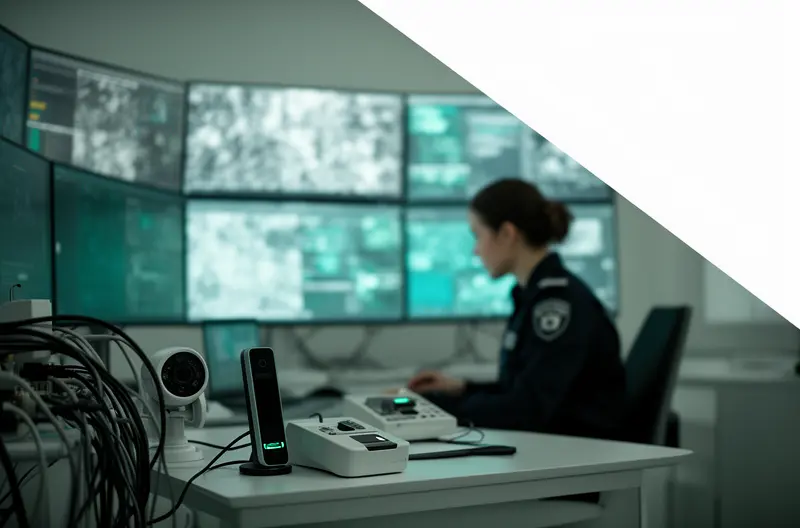
How to compare cybersecurity companies in Barcelona
Before deciding, ask each proposal to answer concrete questions: which assets are included, who operates the alerts, how exceptions are handled, what evidence is delivered, how an incident is coordinated and what happens when the contract ends. A product list is not a substitute for those answers.
- Does the assessment end in an executable roadmap, or only in a list of findings?
- Does the proposal separate implementation, licences, support and operation?
- Is there an owner and an acceptance criterion for each control?
- Are backup, identity, endpoint and network reviewed as one connected system?
- Does the reporting help you decide, or does it just export alerts?
- Is it clear who attends on site in Barcelona, and within what timeframe?
- Can the provider work in English with your team and with group headquarters?
It is also worth reviewing the transition: the initial inventory, access to consoles, ownership of licences, export of evidence and the exit procedure. A healthy relationship lets the company keep control of its information and change the scope without losing documentation or traceability.
Impulso Tecnologico can start with an assessment of your environment and turn it into a phased plan. That way the company invests first where it reduces the most risk and keeps a clear path for the next improvements.
How much does managed cybersecurity cost?
The cost depends on the number of users and devices protected, the services included (EDR/MDR, email, backup, firewall or vCISO), coverage hours, the licences the company already owns and the initial implementation work. That is why we do not publish generic rates: we prepare a closed proposal after a prior scoping study, with implementation, licences and monthly operation priced separately so you can compare it with other offers.
Impulso Tecnologico brings 26 years of experience, more than 470 organisations served and clients in 25 countries. As a cybersecurity company for organisations operating in Barcelona, our goal is that you know which risks you have, what is being done to reduce them and who responds when an alert fires. If you want to start, tell us which systems are critical and we will prepare a prioritised scope. For day-to-day user support alongside security, see our managed IT support in Barcelona.