
IT consulting in Lisbon is most valuable when a business needs to align local operations with group standards without ignoring Portuguese users, suppliers and sites. Impulso Tecnológico reviews infrastructure, identity, Microsoft 365, cloud, networks, security, backup and support responsibilities, then turns the evidence into decisions that management can fund and the technical team can deliver.
The engagement is suited to companies opening or integrating a Lisbon operation, replacing an incumbent supplier, standardising a distributed environment or preparing a migration. Remote governance is combined with the nearest technical resource and local partners when inventory, installation or physical validation is required.
Technology discovery for a Lisbon operation
Discovery begins with the operating model: locations, users, critical applications, data flows, language needs, support windows and group dependencies. We identify what is controlled locally, what is managed by headquarters and what depends on third parties. This responsibility map often exposes more risk than the asset list itself.
The assessment records actual evidence—tenant roles, network diagrams, device inventories, contracts, tickets and recovery records—so recommendations reflect the environment rather than a generic maturity checklist.
Cross-border identity and collaboration
Microsoft 365 and cloud collaboration require consistent identity rules, but local teams still need workable onboarding, support and administration. We review privileged roles, MFA, access conditions, shared resources, external collaboration and joiner-mover-leaver processes. The output clarifies which controls are global and which responsibilities remain with the Lisbon team.
Connectivity, workplace and local dependencies
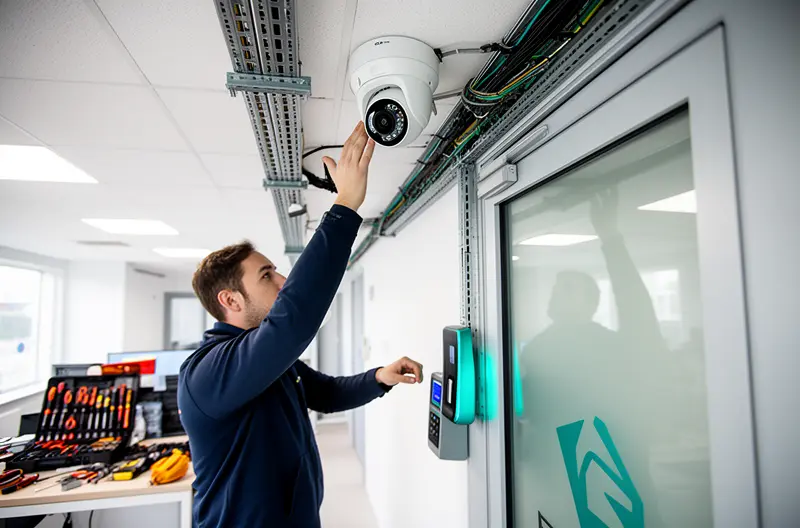
Office connectivity, Wi-Fi, meeting rooms, printing, access control and local providers can determine whether a new site is productive on day one. We document circuits, failover, equipment ownership, support routes and handover evidence. Physical work is scoped separately from governance so costs and responsibilities remain visible.
Supplier transition and service continuity
Changing an IT supplier creates a temporary concentration of risk. A controlled transition inventories credentials, licences, domains, configurations, open incidents, warranties, backups and renewal dates. Access is transferred through company-controlled accounts, not personal credentials, and each handover item has an owner and verification step.
| Transition area | Evidence required | Acceptance test |
|---|---|---|
| Administration | Roles, accounts and recovery methods | Company can access and revoke |
| Infrastructure | Inventory, diagrams and configurations | Assets are identified and manageable |
| Continuity | Backup scope, retention and procedures | Representative restore succeeds |
| Support | Open tickets, priorities and escalation | Users have a working support path |
Exit clauses and retained control
Before signing a new service, the business should understand data export, licence ownership, notice periods, documentation and assistance at exit. Consulting makes these requirements explicit during selection, when they can still influence the contract. The goal is a healthy supplier relationship that does not depend on lock-in.
Continuity during migration
Migration waves are planned around critical services and user groups. Pilot users validate access, performance and support before wider rollout. Rollback conditions, communications and responsibility for failed changes are agreed in advance. This is especially important when a Lisbon site depends on systems managed elsewhere.

Cloud, security and recovery architecture
Cloud decisions are reviewed as an operating model, not a destination. We examine identity, connectivity, data location, logging, backup, administration, costs and incident response. The architecture must state what the platform provides, what the business owns and what the service partner operates.
Security improvements are prioritised around the business services mapped during discovery. Identity and endpoint controls often reduce immediate exposure; network, application and continuity changes may require a phased programme.
Recovery objectives that teams can execute
RPO and RTO are useful only when connected to systems, dependencies, people and tested procedures. We identify which services need rapid recovery, where copies reside, who can access them and how a restore is validated. Results become part of the roadmap rather than a separate backup document.
Cost and governance for cloud services
Cost analysis separates subscriptions, consumption, project work and managed operation. Governance defines who can create resources, approve changes and review spend. This prevents optimisation from becoming a one-off exercise and gives finance a traceable model for forecasting.

A roadmap for Portugal and wider operations
The final roadmap groups work by business outcome: stabilise operations, standardise management, reduce security exposure, improve recovery or enable growth. Initiatives include dependencies, owners, estimates and acceptance criteria. Management can approve individual phases without losing the logic that connects them.
For broader regional coverage, see nationwide IT services in Spain and Portugal. For day-to-day operations, managed IT support for international businesses explains the service model beyond consulting.
Governance after the assessment
Some organisations execute the roadmap internally; others retain periodic governance to review decisions, suppliers, risks and progress. The cadence should match the rate of change. A short decision log and evidence register keep the programme understandable when stakeholders or providers change.
Operating standards that respect local reality
Group standards create consistency, but they need a controlled path for local constraints. A Lisbon office may depend on a building provider, a Portuguese application, different support contacts or a physical installation schedule. We document these constraints and decide whether to adapt the standard, change the dependency or accept a time-bound exception.
The resulting operating standard explains the minimum controls, approved variants and evidence required. This helps new sites and acquisitions adopt the model without copying historical workarounds. It also gives suppliers a clear specification when work is tendered or renewed.
We also identify decision points that need input from finance, legal, human resources or facilities. Technology programmes stall when these dependencies appear only during implementation. Recording them during discovery gives each stakeholder time to review contracts, employee processes, privacy requirements or building access before the technical change reaches its critical path and delays the agreed delivery plan.
Language, documentation and support ownership
User instructions and support communication should be usable by the local team, while technical records remain consistent for wider governance. We identify which documents need Portuguese, English or both, and who owns updates. A diagram that nobody can interpret during an incident is not useful evidence.
Periodic review of local exceptions
Exceptions are reviewed against business need, risk and replacement cost. Some remain valid; others disappear after a platform or contract change. Recording the reason and expiry prevents local flexibility from becoming invisible technical debt, while avoiding a central standard that cannot be operated in practice.