Local IT execution with one accountable coordinator
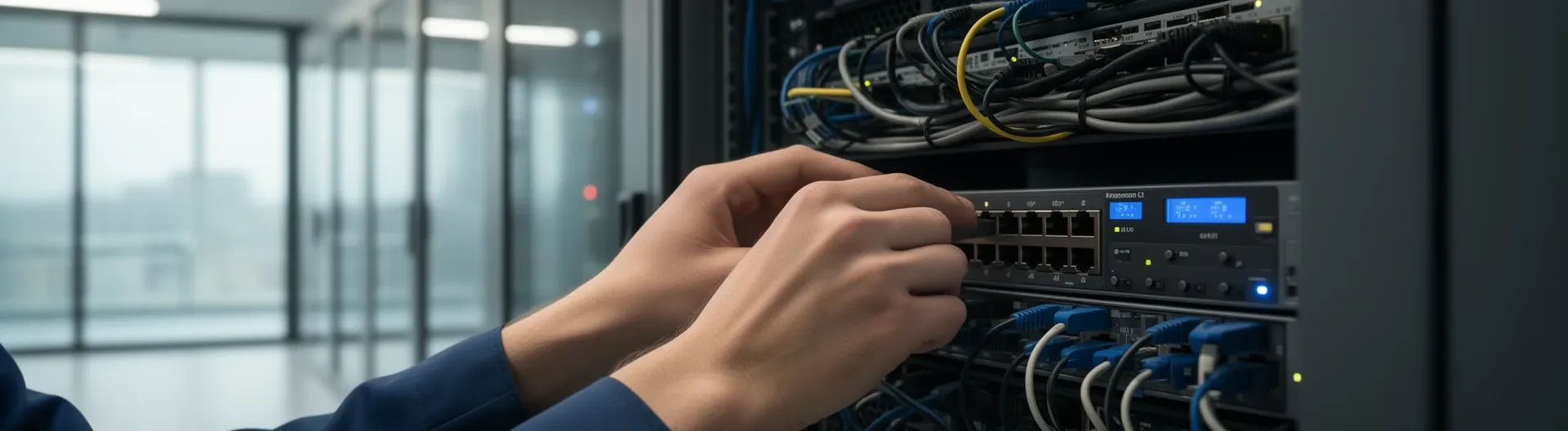
International IT teams often know exactly what must be done but still need a trusted person at the site. We coordinate on-site work in offices, business locations and data centres across Spain and Portugal through our IT field services and smart-hands service. The model is designed for MSPs, systems integrators, manufacturers and internal IT teams that need local execution, documented evidence and a clear handover without building their own dispatch network.
Our own team is based in Madrid. For other locations in Spain and Portugal, we assign the closest suitable local resource or available partner and confirm the location, assigned resource, timing, scope and access for every request. We do not publish a blanket national response time because travel, site induction, equipment availability and the skills required vary by assignment.
One coordinator remains accountable from validation to closure. That gives the remote service desk a single operating channel while the person attending the site receives the approved instructions, escalation path and evidence requirements before starting work.
What our IT field services cover
Endpoints, peripherals and workplace technology
Workplace dispatches can cover the installation, configuration, replacement and troubleshooting of laptops, desktops, monitors, printers, scanners, docking stations and other end-user equipment. The exact activity is agreed in advance, including whether the visit requires user coordination, asset checks, data-handling precautions or equipment supplied by the customer.
- Device refreshes, user moves and documented asset checks.
- Hardware diagnostics and collection of reproducible symptoms.
- Replacement of approved components or complete devices supplied for the assignment.
- Basic configuration and connectivity checks against the customer's runbook.

IMAC, migrations and multi-site rollouts
IMAC means installations, moves, additions and changes. We use that workflow for office moves, onboarding waves, technology refreshes, operating-system migrations and coordinated rollouts. Each visit follows the approved runbook and records serial numbers, outcomes, exceptions and the evidence required by the customer.
For a multi-site programme, the first location can be used to validate the checklist before the remaining visits are grouped into controlled waves. The coordinating team receives a consistent closure format, which makes failed steps and local constraints visible early instead of discovering them after the rollout has finished.
Infrastructure smart hands
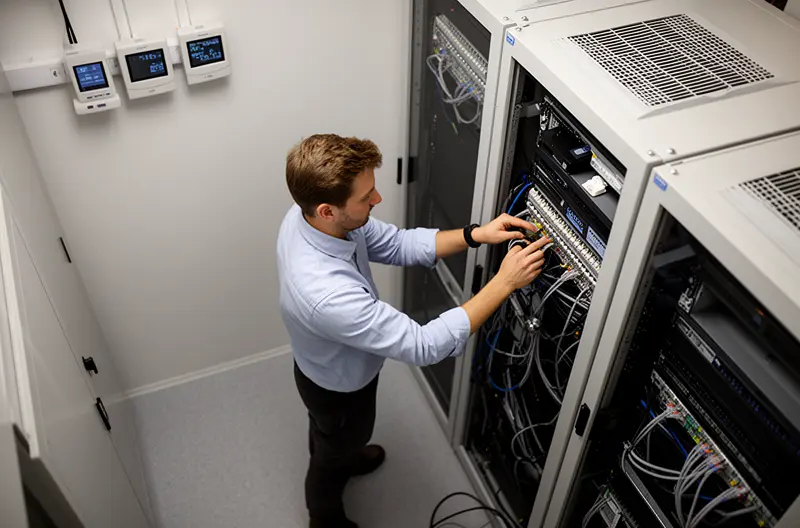
Smart hands provides a local execution layer for a remote network, systems or data-centre team. It is suitable when the remote engineer owns the design and change decision but needs someone authorised to inspect, connect, label or operate equipment at the site.
- Rack-and-stack activities under an approved design and method of procedure.
- Patching, cable tracing, labelling and visual equipment checks.
- Power-cycle, console and status checks directed by the remote engineering team.
- Basic network-connectivity verification and photographic evidence where site policy permits.
When a task requires architecture, a new network design or an engineering decision, it belongs in our network infrastructure service. Smart hands executes an approved instruction; it does not silently turn a dispatch into an unreviewed production change.
Break/fix and dispatch support
We provide scheduled or on-demand dispatches for diagnosis and corrective work. The assigned technician follows the agreed escalation path, records the checks performed and coordinates replacement equipment when that is included in the accepted scope. Parts availability, ownership and delivery dates are confirmed per request rather than assumed.
A useful break/fix scope states the affected asset, observed symptoms, business impact, safe checks, stop conditions and the person authorised to approve a change. If the first visit can only diagnose the problem, the closure report separates what was proven from what remains a hypothesis and identifies what is needed for the next action.
How a field-service dispatch works
- Request: you send the site, contact, task, preferred window and runbook or expected outcome.
- Validation: we confirm access, safety constraints, skills, tools, parts and the evidence required for closure.
- Assignment: we identify the suitable Madrid team member, local resource or available partner and confirm timing and commercial scope.
- Execution: the technician checks in, follows the approved instructions and escalates any deviation before changing scope.
- Closure: you receive the outcome, notes, asset data and permitted photographs, with unresolved items and next actions clearly identified.
Requests with missing access details, unclear change authority or unconfirmed parts remain in validation. This protects both the site and the remote team: a fast arrival is not useful if the technician cannot enter, cannot identify the correct asset or has no authority to complete the requested step.
What we validate before confirming coverage
Coverage is confirmed for the specific assignment rather than inferred from a map. We check the full address, site type, local contact, access and induction rules, preferred service window, required language, technical skills, tools, parts, lifting or safety constraints and the customer's change process. Data centres may also require named access lists, identification documents, escort arrangements and restrictions on photography or removable media.
The runbook should describe the intended end state as well as the steps. Where a remote engineer will direct the work live, we agree the communication channel and escalation contacts. Where the technician will work independently, the acceptance criteria must be objective enough to close the task without guesswork.

Evidence, reporting and handover
The closure record is part of the service, not an afterthought. Depending on the approved scope it can include check-in and check-out times, technician notes, asset identifiers, serial numbers, port or cable labels, test results, permitted photographs, deviations, unresolved risks and recommended next actions. The customer defines which evidence is required and where it may be stored.
For repeated dispatches, a common report template makes performance comparable across sites. Exceptions can be reviewed by category—access, missing equipment, runbook ambiguity, asset mismatch or technical failure—so the coordinating team can improve the next wave instead of treating every visit as an isolated ticket.
Field services are not the same as outsourcing or managed services
- IT field services and smart hands: site visits, IMAC, break/fix and rollout tasks executed against an agreed scope with evidence and closure.
- IT outsourcing: additional technical capacity assigned for a period within the customer's operating model.
- Managed IT services: recurring monitoring, support and operational routines delivered as an agreed continuous service.
- Infrastructure projects: architecture, design, deployment or transformation delivered as an implementation project.
The models can complement one another, but their accountability is different. A field-service request has a defined site task and closure; outsourcing supplies capacity; managed services own recurring operational outcomes; and an infrastructure project owns a designed change.
Designed for MSPs and international IT teams
You keep control of the service desk, standards and remote engineering. We provide the local execution layer, communicate in English with the coordinating team and support Spanish or Portuguese interaction at the site when required. For larger programmes, visits can be grouped into waves with common checklists, acceptance criteria and consolidated reporting.
This service also complements our guidance for multinationals operating in Spain and Portugal and multi-site businesses. To request coverage, send the location, task, preferred window, access requirements and expected evidence. We will confirm the suitable resource, timing and scope before accepting the assignment.