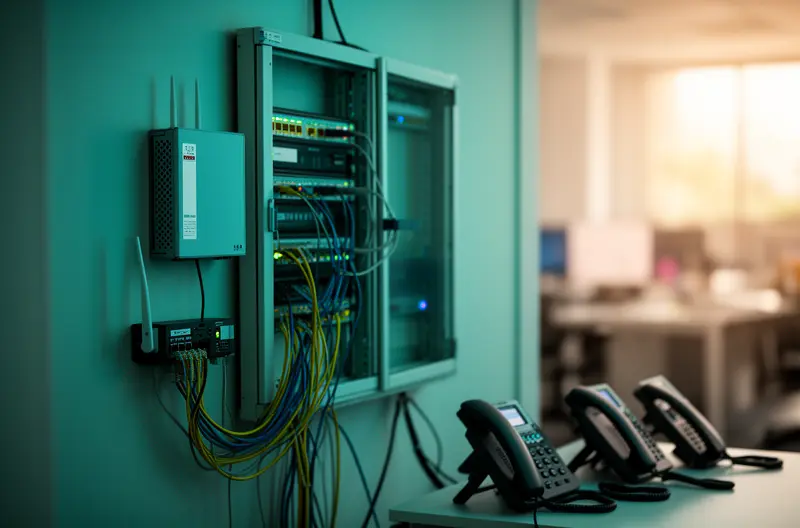
IT maintenance services for companies in Barcelona cover the ongoing management of hardware, software, networks, and security to prevent failures before they disrupt operations. A structured maintenance plan combines proactive monitoring, patch management, backup verification, and rapid incident response under defined service levels.
Barcelona businesses face a specific challenge: technical problems do not wait for convenient moments. A server failure mid-morning, an endpoint compromised by an unpatched vulnerability, or a backup that has not been verified in weeks — these are not hypothetical risks, they are operational realities that affect revenue and reputation. Reactive IT support (fixing things after they break) consistently costs more in downtime and recovery than a structured maintenance programme.
The right approach pairs continuous monitoring and scheduled preventive work with measurable response commitments. At Impulso Tecnológico, we have seen this model reduce disruptive incidents significantly across clients in Barcelona and beyond — from SMEs to multinational operations — by addressing risks before they escalate. The result is predictable costs, fewer surprises, and a technology environment that supports rather than interrupts the business.
What IT maintenance services typically include (for Barcelona businesses)
Many providers list "IT maintenance" as a single line item. In practice, it is a collection of distinct, interconnected activities — and the difference between a robust service and a basic one becomes visible only when something goes wrong. Before comparing providers, map what they actually deliver against the components your business depends on.
At Impulso Tecnológico, our maintenance model is built around an audit-first process: we establish a documented baseline covering antivirus protection, backup integrity, server and desktop health, and communications infrastructure. That baseline drives the preventive schedule and defines where corrective effort is most likely to be needed. Every action is documented, and clients receive clear communication throughout the engagement — not just when incidents occur.
| Maintenance component | What it covers | Delivery mode | Business impact if missing |
|---|---|---|---|
| Proactive monitoring | Continuous visibility of servers, endpoints, and network performance | Remote (automated + analyst review) | Failures detected late; extended downtime |
| Patch management | OS and application updates, security patches, firmware | Remote (scheduled) | Unpatched vulnerabilities exploited |
| Backup integrity testing | Verification and test restoration of backup sets | Remote / onsite | Data loss with no viable recovery path |
| Security health checks | Endpoint protection, access controls, GDPR-aligned audit | Remote / onsite | Compliance exposure and breach risk |
| User and helpdesk support | Desktop issues, software queries, account management | Remote / onsite | Lost productivity and user frustration |
| Network monitoring | Wired and wireless connectivity, performance optimisation | Remote / onsite | Connectivity degradation affecting operations |
| Hardware inspection | Physical wear detection, component risk assessment | Onsite (scheduled) | Unexpected hardware failure and data loss |
Proactive maintenance: monitoring, patch management, and security health checks
Proactive maintenance is the discipline of identifying and resolving risks before they cause failures. It rests on three pillars: continuous monitoring, structured patch management, and regular security health checks.
Monitoring means having real-time visibility across servers, endpoints, and network infrastructure — not checking logs once a week. Patch management ensures that operating systems, applications, and firmware are updated on a controlled schedule, closing the vulnerabilities that attackers routinely exploit. Security health checks go further: reviewing endpoint protection status, access control configurations, and alignment with GDPR obligations.
Impulso Tecnológico delivers this using technologies from Sophos and Fortinet when they fit the accepted scope, supported by a technical team that reviews alerts and acts before they escalate. For Barcelona businesses, this translates to fewer unplanned outages and a measurably lower attack surface — particularly relevant given the increasing frequency of ransomware and phishing campaigns targeting SMEs. Our approach to preventive IT maintenance is built around scheduled reviews, not ad-hoc reactions.
Backups and recovery: backup integrity testing and restoration procedures
A backup that has never been tested is not a backup — it is an assumption. Backup integrity testing means regularly verifying that backup sets are complete, readable, and restorable within an acceptable timeframe. Many companies discover gaps in their recovery capability only during an actual incident, at which point the cost of that discovery is far higher than the cost of prevention.
Effective backup management within an IT maintenance programme covers scheduled verification of backup jobs, test restoration procedures to confirm data can be recovered, review of retention policies, and documentation of recovery time objectives. Impulso Tecnológico uses Veeam as a core technology for backup and disaster recovery, enabling granular restoration and clear audit trails. For Barcelona businesses operating under GDPR, documented backup and recovery procedures are not optional — they are part of demonstrating accountability for personal data protection. Corrective maintenance, when incidents do occur, relies on this foundation to restore normal operations quickly and with minimal data loss.
User and endpoint support: helpdesk, desktop issues, and software queries
Endpoint support is where IT maintenance becomes most visible to the people who use the technology every day. Desktop issues, software errors, account access problems, and peripheral failures all affect individual productivity — and if they are not resolved quickly, they accumulate into significant operational drag.
A structured helpdesk function within an IT maintenance service should cover: first-line triage and resolution for common desktop and software issues, escalation to second or third line for complex problems, endpoint health management (ensuring devices are patched, protected, and performing correctly), and clear communication with the user throughout the resolution process.
Our endpoint management extends to Microsoft 365 environments, including identity, licensing, and collaboration tools, ensuring that the full device-to-cloud stack is covered under a single maintenance model. For a broader view of how this fits into managed IT support and maintenance, see our overview of IT maintenance for businesses.

Service levels and SLAs: what to ask before hiring
An IT maintenance contract without defined service levels is a promise without accountability. SLAs translate commitments into measurable obligations — and they are the primary tool for evaluating whether a provider can genuinely protect your business continuity or is simply offering best-effort support.
Impulso Tecnológico backs its maintenance service with transparent SLAs: standard requests are addressed within eight hours, and urgent server issues within four hours. These commitments are established from day one, supported by an audit baseline that aligns expectations with the actual state of your infrastructure. Monthly costs are fixed and predictable, with no hidden charges.
Before signing with any provider offering IT maintenance services for companies in Barcelona, work through the following evaluation checklist:
- Define response time tiers: Confirm specific targets for standard, high-priority, and critical incidents — not vague commitments like "as soon as possible".
- Clarify escalation paths: Ask who handles the issue if the first-line technician cannot resolve it, and within what timeframe escalation is triggered.
- Confirm coverage hours: Establish the working hours during which SLAs apply and what process exists outside those hours for genuine emergencies.
- Request a reporting schedule: Agree on the frequency and format of maintenance reports — monthly summaries, incident logs, and patch status updates are standard minimums.
- Verify scope boundaries: Confirm exactly which devices, systems, and locations are covered, and what falls outside the contract.
- Check documentation standards: Ensure that all actions, changes, and incidents are logged and accessible — this is essential for GDPR compliance and for continuity if you ever change provider.
Response times and escalation: standard vs urgent handling and priority definitions
Response time commitments are only meaningful when they are tied to clear priority definitions. A provider that promises "fast response" without specifying what constitutes a standard request versus a critical incident is leaving room for interpretation that rarely favours the client.
At minimum, a credible SLA structure should define at least three priority levels: standard (affecting individual users or non-critical systems), high (affecting multiple users or a business-critical function), and critical (server down, data loss risk, or security incident). Each level needs a committed response time and a resolution target.
Impulso Tecnológico documents response targets by incident priority in the accepted service agreement. Escalation is structured: if first-line resolution is not achieved within the response window, the incident moves to a senior technical resource. This structure is particularly important for Barcelona businesses where a server outage during peak hours has an immediate and quantifiable operational cost. Our model for proactive IT maintenance is designed to reduce the frequency of critical incidents reaching this escalation point.
Reporting and documentation: what you should receive and how often
Reporting is how you verify that your maintenance contract is delivering value — and how you demonstrate IT governance to auditors, insurers, or regulators. Without structured documentation, you are relying on a provider's word rather than evidence.
A minimum reporting standard for managed IT support and maintenance should include: a monthly summary of maintenance activities completed (patches applied, backups verified, health checks performed), an incident log with resolution times and root cause notes, open items and scheduled actions for the coming period, and any identified risks or recommendations. For GDPR-relevant environments, documentation of access control reviews and data handling procedures should also be included.
Impulso Tecnológico provides clear documentation and continuous communication as a standard part of its maintenance model. Clients receive structured updates so that IT decision-makers — whether a dedicated IT manager or a business owner managing IT directly — always have an accurate picture of system health, pending actions, and service performance. This transparency also simplifies the onboarding process if the engagement is ever reviewed or extended.
Coverage and channels: remote vs onsite support, working hours, and communication workflow
Coverage terms define when and how your provider can actually help you. A contract that looks comprehensive on paper but only covers remote support during limited hours may leave critical gaps for businesses with physical infrastructure or complex onsite environments.
Key questions to resolve before signing: What are the contracted working hours, and are SLAs measured only within those hours? What channels are available for raising incidents — phone, email, ticketing portal? Is onsite support included or charged separately, and what triggers an onsite visit? How quickly can a technician be physically present in Barcelona if remote resolution is not viable?
Impulso Tecnológico defines the service window, support language and channel in the accepted scope. Remote assistance handles the majority of incidents efficiently; onsite presence is available when the situation requires it. Communication is managed through structured channels so that every request is tracked, prioritised, and resolved with a documented outcome — not lost in an email thread. For businesses across the region, our IT technical support for businesses covers both remote and field service delivery.

Choosing the right maintenance model in Barcelona: remote, onsite, and team accountability
The structure of your maintenance model — who is responsible, how they are deployed, and how continuity is maintained — determines whether your IT support actually functions under pressure or only works when conditions are ideal.
Impulso Tecnológico's approach begins with an audit-first onboarding process that creates a documented baseline across antivirus protection, backup integrity, server and desktop health, and communications infrastructure. That baseline drives the decision on which issues require onsite attention and which can be resolved remotely, aligning preventive and corrective maintenance to your specific operational environment.
When evaluating maintenance models, consider these practical criteria:
- Continuity of knowledge: Does the provider maintain documented system records so that any technician can pick up where another left off?
- Escalation clarity: Is there a named escalation path, and are response commitments maintained regardless of who is handling the ticket?
- Onsite capability: Can the provider physically attend your Barcelona location when remote resolution is insufficient — and within what timeframe?
- Language and communication: For international teams, bilingual support (Spanish and English) reduces friction and errors during incident handling.
- Scope alignment: Does the model cover your full device and infrastructure footprint, including cloud environments, network equipment, and endpoints?
- Flexibility: Can the contract adapt as your business grows, adds locations, or changes its technology stack — without requiring a full renegotiation?
Dedicated technician vs team model: pros, cons, and escalation safeguards
A dedicated technician model offers genuine continuity advantages: the same person learns your infrastructure, your team's habits, and your operational priorities over time. This reduces the diagnostic overhead on every new incident and builds a working relationship based on accumulated context rather than repeated explanations.
The risk is availability. If your dedicated technician is ill, on leave, or handling another client's critical incident, your SLA commitments need to be maintained by someone else — and that requires documented escalation safeguards. Before committing to a dedicated model, confirm: Is there a named backup technician? Are system records maintained centrally so a second technician can act without delay? Are SLA clocks paused or maintained during escalation?
Impulso Tecnológico operates with a multidisciplinary technical team and centralised documentation, meaning that continuity is built into the service structure rather than dependent on a single individual. Clients benefit from consistent knowledge of their environment combined with the resilience of a full team — a balance that the dedicated model alone cannot always guarantee.
Remote vs onsite support: when remote works and when onsite is essential
Remote support resolves the majority of IT incidents efficiently — software errors, configuration issues, user account problems, patch deployments, and monitoring alerts can all be handled without a technician physically present. For Barcelona businesses, this means faster resolution times and lower costs for routine maintenance activities.
Onsite support becomes essential in specific scenarios: hardware failure requiring physical replacement or inspection, network infrastructure issues that cannot be diagnosed or resolved remotely, initial deployment or significant infrastructure changes, and situations where a physical security or access control system is involved. Environmental factors — such as a server room with connectivity issues or a warehouse with complex wireless infrastructure — also require onsite capability.
Impulso Tecnológico provides remote support and confirms any local intervention for the request by location, resource, timing, scope and access. The audit baseline established at onboarding identifies which elements of your environment carry the highest onsite dependency, so that response planning is realistic from the start. Companies operating across multiple Spanish locations may also benefit from our IT support in Valencia and other regional coverage.
Onboarding and first 30 days: audit baseline, risk review, and preventive schedule setup
The first 30 days of an IT maintenance engagement determine whether the service delivers value or simply reacts to problems as they appear. A structured onboarding process transforms a new contract into an operational maintenance plan grounded in evidence.
Impulso Tecnológico's onboarding follows a defined sequence: a comprehensive system audit covering antivirus protection status, backup integrity, server and desktop health, network configuration, and communications infrastructure; a risk review that prioritises vulnerabilities and gaps identified during the audit; documentation of the baseline so that all future maintenance activity is measured against a known starting point; and the creation of a preventive maintenance schedule aligned with the client's operational calendar and risk profile.
This process eliminates the guesswork that characterises reactive IT support and gives both parties a shared, measurable definition of what "maintained" looks like. For companies comparing managed IT services for Barcelona businesses, this audit-first model is a concrete differentiator — not a promise, but a documented process with a defined output.
Selecting an IT maintenance provider in Barcelona comes down to three verifiable criteria: the scope of what is actually covered, the SLAs that govern response and resolution, and the accountability structure that ensures commitments are met when pressure is highest. Providers that score well on all three — and can demonstrate it through a structured onboarding audit — are the ones that deliver measurable continuity rather than reactive firefighting. Start with an audit: it converts expectations into a documented maintenance plan, identifies risks before they become incidents, and gives you the baseline needed to hold any provider accountable from day one. Impulso Tecnológico is ready to carry out that audit and build a maintenance programme tailored to your Barcelona operation.